Team Image
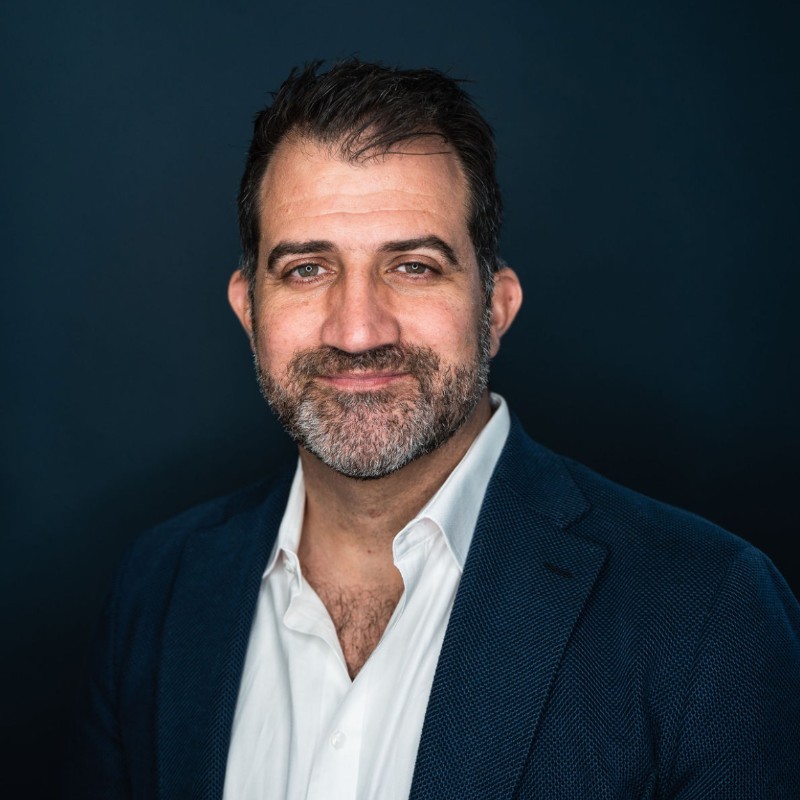
Zain Khalpey

Chief Medical AI Officer, ATARI AI
Chair of Applied Clinical AI, ATARI AI Foundation Director, Khalpey AI Lab

Dr. Zain Khalpey is a robotic heart surgeon and AI leader, directing the Artificial Heart Program in Arizona. He pioneers AI-driven patient care and surgical innovation, with research in organ longevity, robotic surgery, and AI-powered risk prediction leading to multiple patents and global adoption. At ATARI, he transforms AI breakthroughs into real-world medical solutions. A sought-after speaker and Fortune 500 advisor, his book The AI Prescription explores how AI enhances human expertise in medicine.

Team Image
Amina Khalpey, PhD

President, ATARI AI Foundation Director,
ATARI AI Foundation - Academy Co-Director, Khalpey AI Lab

Dr. Amina Khalpey is a plasma physicist whose work sits at the intersection of medicine, engineering, and artificial intelligence. Her early research applied plasma technology to improve the surface properties of artificial cardiac grafts, teaching her a principle that has shaped everything since: the tool must serve the patient, not the other way around.

She holds a PhD in Plasma Physics and an MS in Biomedical Engineering, with research completed at CNRS laboratories in Paris and Montpellier. Her career has spanned leadership roles at MIT, the Whitehead Institute, and Harvard, where she worked across scientific collaboration, intellectual property, humanitarian medicine, and translational research.

Today, she serves as President of the Applied Translational Artificial Intelligence Research Institute, ATARI, and Co-Director of the Khalpey AI Lab, where she leads AI-driven research in cardiac care. Her work focuses o
n heart-rate variability and waveform technologies for conditions such as sudden cardiac death, atrial fibrillation, and silent hypoxia, guided by a central conviction: artificial intelligence can support medicine, but it must never be allowed to outrun accountability.

Her forthcoming book, The Red Line: What AI Must Never Do in Medicine, took four years to write. It grew out of earlier manuscripts focused on AI’s promise in medicine, but over time the project shifted toward a harder question: not only what AI can do, but what medicine must never allow it to do.
The Red Line is not a rejection of AI in medicine. It is a demand that medicine draw the line before artificial intelligence becomes too embedded, too opaque, and too powerful to challenge.

Team Image
Nicholas King

Chief Executive Officer, ATARI AI
Chair of Clinical Data Science, ATARI AI Foundation Co-Director, Khalpey AI Lab

Nicholas King has built and developed multiple categories including Azure SQL, Google Cloud AI, Android Enterprise, DataRobot. Nick has 20 years experience in enterprise and government Applied AI use cases. He focuses primarily on regulated industries with specific bodies of research in healthcare, oil & gas, supply chain, and decision intelligence.

Team Image
Raquel Flowers

General Secretary

Raquel (Raq) Flowers is a seasoned Chief of Staff and Operations Leader with a talent for executing complex projects in high-stakes environments. A U.S. Air Force combat veteran, she has served in Afghanistan, Oman, and Iraq, applying military precision to corporate operations. With experience at VMware, AtScale, DataRobot, Cisco, and Tenable, Raq drives transformative change and operational excellence. She is fluent in English and Spanish, bringing a results-driven, strategic approach to global leadership. Her hands-on approach and relentless focus on results set her apart as a leader who truly makes an impact.

Team Image
David Gonzales

Chief Executive Officer

David “Gonzo” González co-founded Zeff.ai, acquired in 2020 by Boston-based DataRobot where he succeeded in bringing a jobs-to-be-done perspective to focus product strategy.Gonzo pioneered transactionally authored training and inference on multi-modal datasets and is the primary author of The AI Manifesto for Applied Artificial Intelligence Development and has multiple ML patents.